In Mexican tradition, few gestures carry as much feeling as flowers. A ramo — the Spanish word for bouquet or floral arrangement — is more than a gift. It's a statement. Whether it's a single rose handed across a table or an enormous, ribbon-wrapped arrangement arriving at someone's door, the ramo has deep roots in Mexican celebration and courtship culture that stretch back centuries.
If you've been seeing elaborate flower bouquets all over social media lately, or if you're planning a quinceañera or wedding and want to understand the floral traditions that go with it, this is everything you need to know.

What Does "Ramo" Mean in Spanish?
A ramo (pronounced RAH-mo) simply means bouquet or bunch in Spanish — it comes from rama, meaning branch. In everyday Spanish, you might hear ramo de flores (bouquet of flowers) or ramo de novia (bridal bouquet). But in Mexican and Mexican-American culture, the word carries extra weight. It's tied to the rituals of courtship, celebration, and the way Mexicans have always used flowers to mark meaningful moments.
Flowers have been sacred in Mexican culture since long before colonial times. The Aztecs documented elaborate flower arrangements in religious ceremonies, and the practice of presenting flowers as a gesture of affection was already well established when the Spanish arrived. That tradition never went away — it evolved.
What Is a Ramo Buchón?
The ramo buchón (also spelled buchon) is a contemporary evolution of the traditional Mexican flower bouquet — and the version that's taken social media by storm. These arrangements are known for their sheer size and extravagance: oversized, densely packed with premium blooms (often roses, calla lilies, or orchids), wrapped in layers of tulle, ribbon, and sometimes embellished with plush toys, lights, money fans, or designer packaging.
The buchón aesthetic originated in Sinaloa, Mexico, and is associated with a style that celebrates abundance and generosity — opulent, unabashed, and deeply rooted in showing the people you love that they matter. A well-made ramo buchón can run anywhere from $150 to over $1,000 depending on size and materials.
What started as a regional gifting tradition has spread widely through TikTok and Instagram, where videos of recipients unwrapping massive flower arrangements have racked up millions of views. Today, florists across the US and Mexico offer ramos buchones for birthdays, quinceañeras, graduations, Mother's Day, Valentine's Day, and anniversaries.
The Traditional Mexican Flower Bouquet
Long before the ramo buchón went viral, the ramo was already a cornerstone of Mexican celebration. In traditional Mexican weddings, the ramo de novia — the bridal bouquet — holds specific meaning. It's typically carried by the bride and blessed during the ceremony, then tossed to guests or placed at a religious shrine as an offering of gratitude.
At a quinceañera, the último baile (last dance) often features the quinceañera presenting her bouquet to the Virgin Mary or a religious figure as she transitions from childhood into womanhood — a deeply symbolic moment for the family. Flowers also appear throughout the celebration in centerpieces, hair arrangements, and court decorations.
Beyond weddings and quinceañeras, ramos appear at nearly every major life event in Mexican culture: baby showers, baptisms, graduations, Día de los Muertos altars, and of course, the simple but powerful gesture of a man arriving at someone's door with flowers.
What Is the Traditional Mexican Flower?
Mexico has a rich floral heritage, and several flowers carry deep cultural significance.
Cempasúchil (marigold) is probably the most iconic — the bright orange blooms used to guide spirits home during Día de los Muertos. Their strong scent is believed to lead the dead back to the living world.

Dahlia is actually Mexico's national flower, native to the country and cultivated there for centuries before spreading across the world. Dahlias appear widely in traditional Mexican art and celebrations.
Calla lily (alcatraz in Spanish) is deeply associated with Mexican religious and wedding traditions, famously painted by Diego Rivera and Frida Kahlo.
Roses are the most common choice for ramos buchones and everyday gifting — abundant, expressive, and universally understood.
Pairing a Ramo with Something Sweet
In Mexican celebration culture, flowers and food have always gone together. A ramo sets the scene; the food and sweets make the moment complete. If you're planning a quinceañera, a wedding, or even a birthday where a ramo buchón is going to be a centerpiece moment, Mexican cookies make a natural pairing for the dessert table.
There's something fitting about it: both the ramo and the polvorón are rooted in the same tradition of making people feel seen and celebrated. The ramo says you matter the moment someone walks in the room. The cookies say it again, one buttery, melt-in-your-mouth bite at a time.
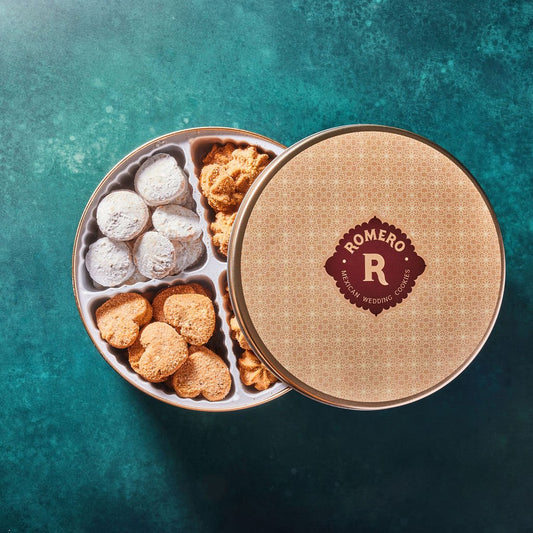
Romero's handcrafted polvorones are made in small batches using a four-generation family recipe and can be ordered for weddings, quinceañeras, and any celebration that deserves something authentically special.